A quiet room is built slowly, from light, cloth and things that last.
Calm at home does not come from owning less for its own sake, nor from a particular style. It comes from good light, a few natural materials, places for things, gentle evening habits and objects you can keep and mend. This guide walks through each of those, one section at a time.
Part 01Light and colour that let a room settle
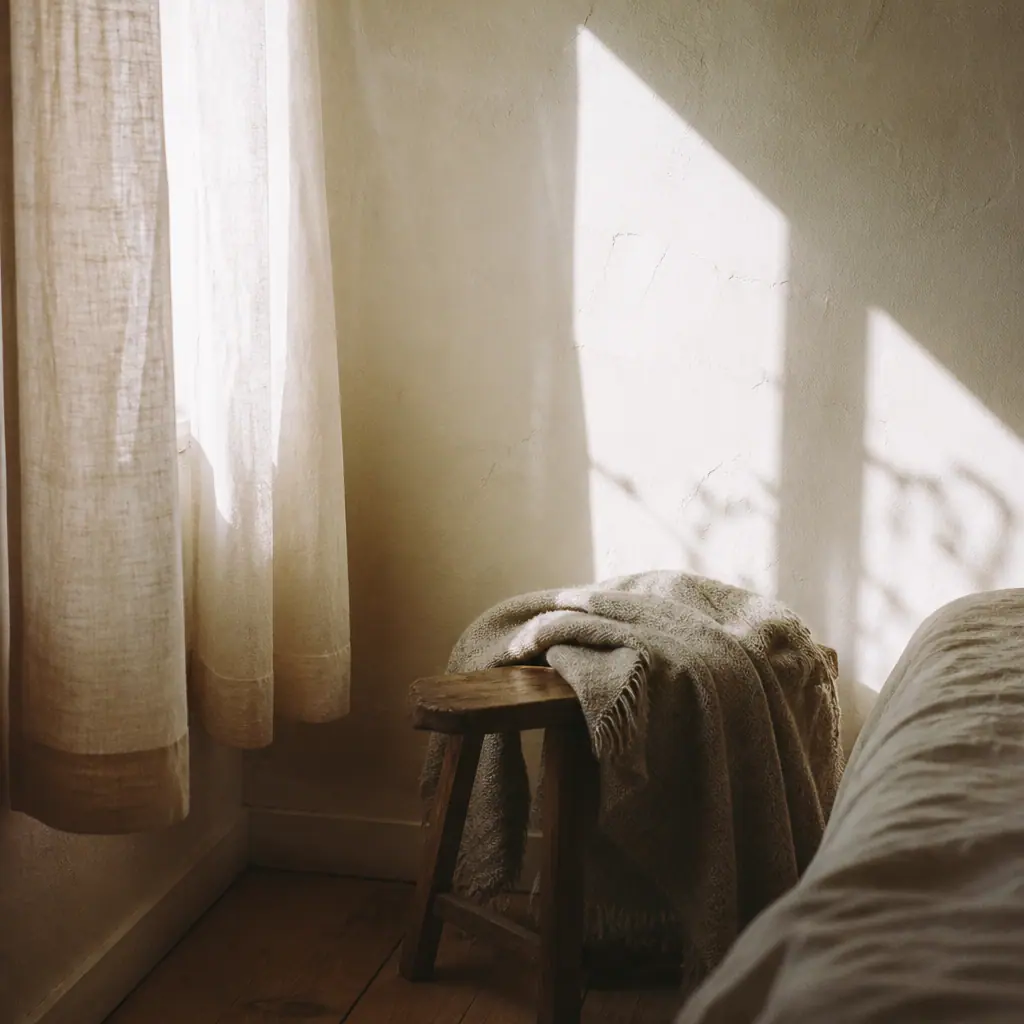
A room feels calm when the eye has somewhere to rest. Most of that comes from light, and light is usually the cheapest thing to improve. Start by watching a room across a normal day. Note where the sun lands at breakfast, where the shadows pool at four o'clock, and which corner turns dim and slightly grey by evening. The pattern will tell you more than any colour chart.
Work with the daylight you have
Keep the window itself clear. Heavy layers, deep sills crowded with objects and fussy blinds all cut the amount of light that gets in. A single curtain in unlined linen softens glare and still lets the room glow. If a window faces north, the light is cool and even, so warm neutrals such as oatmeal, soft clay and a muted sage will stop it feeling clinical. A south-facing room can carry cooler greens and chalky greys without turning cold.
Choose a few colours and repeat them
Calm interiors rarely use many colours. A good habit is to pick one pale base, one mid tone drawn from nature, and one small accent such as a baked ochre or a dark pine. Repeating them in different materials, a rug, a bowl, a cushion cover, makes a room look planned even when every piece was collected slowly. Avoid strong contrast between wall and woodwork if you want an unbroken, quiet feel.
Lamps at eye level, not a single ceiling light
One bright light overhead flattens everything. Two or three low sources, a table lamp, a wall light, a small lamp on a shelf, give pools of warmth and let you switch off the parts of the room you are not using. Choose bulbs with a warm colour temperature in the range of 2,200 to 2,700 kelvin for evenings, and keep shades in paper, cotton or linen so the glow is diffused rather than glaring.
A useful test: stand in the doorway in the evening and squint. If one bright spot or one dark corner pulls your eye, move a lamp or remove an object before buying anything new.
Part 02Natural textiles: linen, wool and cotton
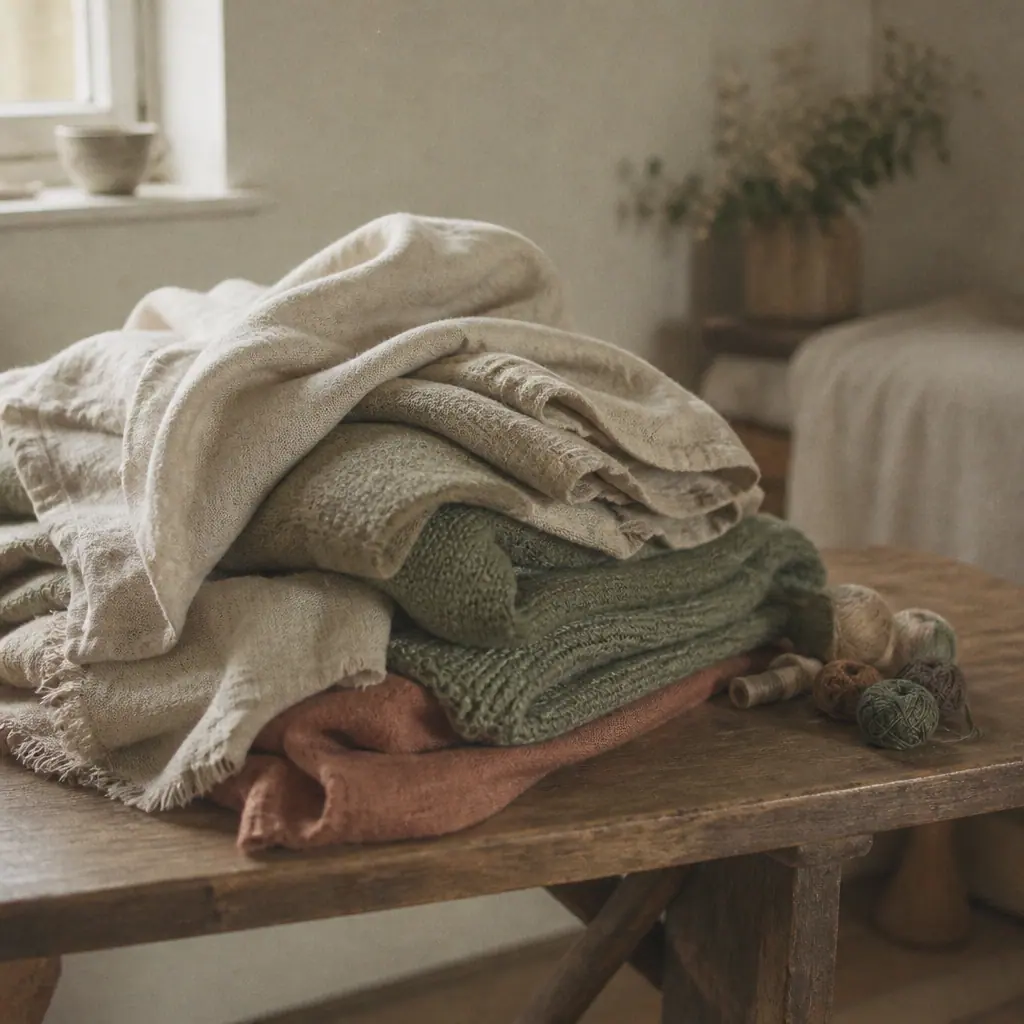
Textiles decide how a room sounds, feels underfoot and smells after a rainy week. Natural fibres age well, can be washed or aired, and tend to look better after years of use rather than worse. The trick is to know what each one is good at.
Linen
Linen is made from flax, is strong when wet, and softens with every wash. It suits curtains, bed sheets, table cloths and tea towels. It creases, and that is part of its character. Wash it warm rather than hot, dry it flat or on a line, and iron it slightly damp if you want it crisp. A heavier weave works for upholstery and cushion covers.
Wool
Wool insulates, resists odours and is naturally slow to catch fire. Use it for throws, rugs and blankets. It rarely needs washing; a good airing and an occasional brush are usually enough. When it does need a wash, use a wool-safe detergent, cool water and no wringing. Moths are the real enemy, so keep stored wool clean, dry and aired, with cedar or lavender sachets as a gentle deterrent.
Cotton
Cotton is the easy everyday choice for towels, bedding and loose covers. Look for a dense weave and long fibres, which show up as a smoother, more durable cloth. Plain, undyed or lightly dyed cotton fits the quiet palette better than bold prints, and it takes a patch or a darn without fuss.
Reading the label
Blends are not always bad, but a cover that is mostly synthetic will often shed tiny fibres, hold odours and pill quickly. When you compare two similar throws, check the fibre content first, then the weight, then the finish. A heavy, plain piece in one fibre is generally the longer-lasting buy.
Part 03Storage that keeps surfaces clear
Clutter is mostly objects without a home. A calm room is not an empty one; it is a room where things have an obvious place and returning them takes seconds. Before adding any new box, basket or cabinet, decide what you actually own and how often you use it.
Sort by use, not by category
Keep daily things at hand height near where they are used: keys by the door, a tray for post, one basket for the book and glasses you read from. Put seasonal or rarely used items higher, lower or farther away. If you have not touched something in a year and it is neither precious nor essential, it is a candidate to pass on.
Closed storage for the busy things, open for the beautiful ones
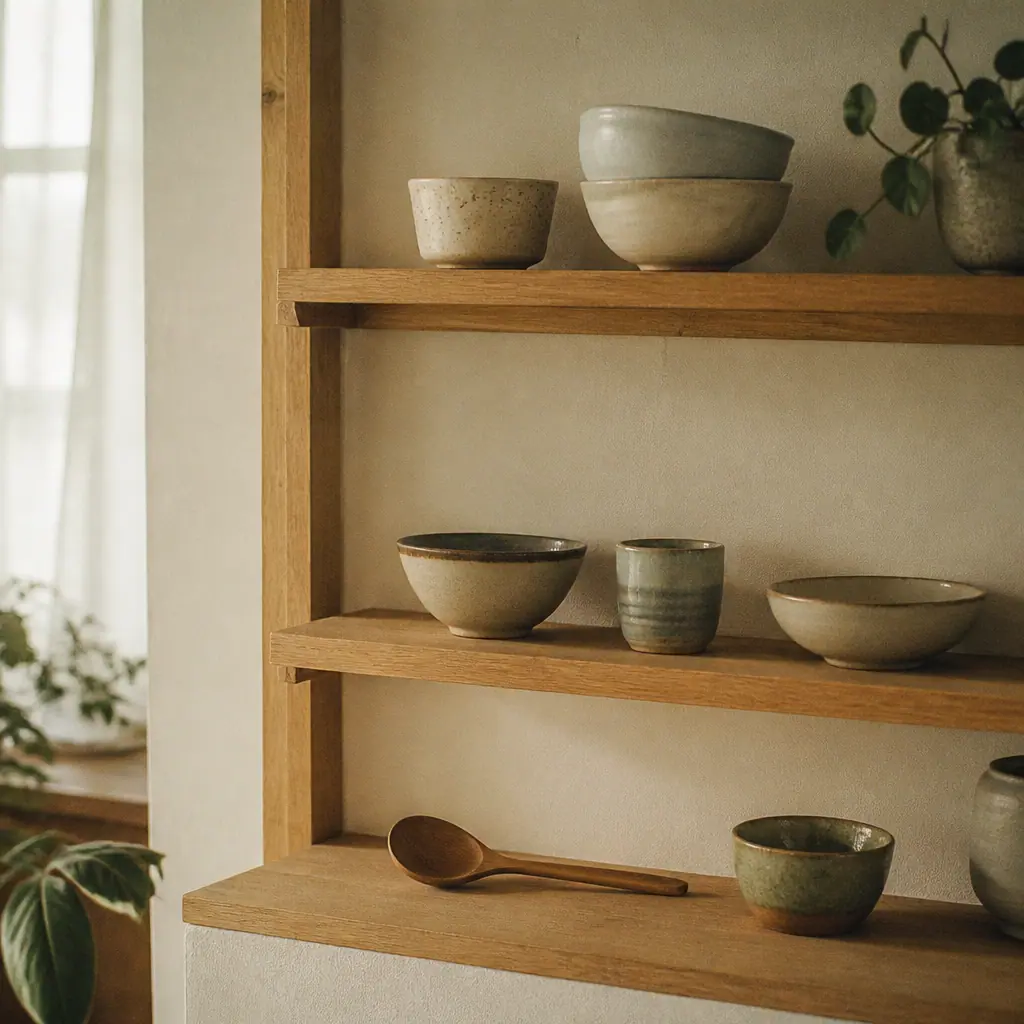
A closed cupboard hides the noise of cables, paper and plastic. An open shelf can display the few items you want to see, such as three bowls, a plant and a lamp. The rule that helps is leaving about a third of every shelf empty, so that each object has room to be looked at.
Containers worth owning
- Lidded wooden or cardboard boxes with a flat finish, which stack and age well.
- Woven baskets in seagrass, willow or cotton rope for blankets and toys.
- Simple hooks and a rail, which are cheaper and more flexible than furniture.
- Glass jars for dry goods, which show what is left and need no labels.
Choose storage after you have sorted, never before. Buying containers first usually means buying more containers than you need.
Part 04Ceramic and wood: objects you touch every day
Bowls, mugs, boards, spoons and shelves are handled many times a day, so small differences in quality add up. Good ceramic feels balanced in the hand, and good wood feels smooth rather than sticky or splintery.
Choosing ceramic
Stoneware and porcelain are fired at high temperatures and are dense and durable. Pick up a mug before you commit: is the handle comfortable, is the base stable, is the rim pleasant against the lip? A matte or satin glaze hides small scratches, while a speckled body shows chips less. Hairline cracks and crazing in the glaze are a sign to retire a piece from food use.
Caring for wood
Solid hardwoods such as oak, ash, beech and walnut last the longest. Keep chopping boards and spoons out of the dishwasher and never leave them soaking. Wash by hand, dry upright, and rub in a little food-safe oil, such as mineral oil or a beeswax blend, when the surface looks pale. Furniture benefits from a wipe with a barely damp cloth and a thin coat of wax once or twice a year.
Mixing materials
Wood warms ceramic, and ceramic cools wood. A shelf with one pale bowl, one dark bowl and a wooden board looks settled because the materials balance each other. Keep shapes simple and let the texture do the decorating.
Mend what you can. A chipped mug can become a pen pot, and a wobbly table leg is often a ten-minute fix with a screw and some wood glue.
Part 05Candles and home fragrance without excess
Scent is the most personal part of a home, and also the easiest to overdo. A calm room usually smells of very little: clean air, a trace of wood, perhaps something warm when a candle is lit. More is rarely better.
Air first
Fresh air does most of the work. Open windows for ten minutes a day, even in winter, and deal with the source of any odour before covering it. Washing textiles, emptying bins and drying damp towels removes more smell than any burning wax.
Burning candles sensibly
If you enjoy candles, buy fewer and burn them well. Trim the wick to about five millimetres before each lighting, let the wax melt right to the edge the first time to avoid tunnelling, and snuff the flame rather than blowing it out. Keep candles on a stable, heat-proof surface away from curtains, and never leave them burning in an empty room or while you sleep. Beeswax and plant-based waxes tend to burn cleanly, but a good wick and sensible use matter more than any label.
Gentler alternatives
- A small bowl of dried lavender or a few cedar blocks in drawers.
- Simmering a pan with citrus peel and a cinnamon stick for an hour.
- A single stem of a scented plant, such as rosemary or a sprig of eucalyptus.
Whichever you choose, allow gaps with no fragrance at all. A room that sometimes smells of nothing lets you notice and enjoy the scent when it returns.
Part 06Tea and the evening wind-down
Rituals are small repeated actions that tell the body the day is finishing. They do not need equipment or much time. What matters is that they happen in roughly the same order and in a place that feels set apart from work.
A simple tea routine
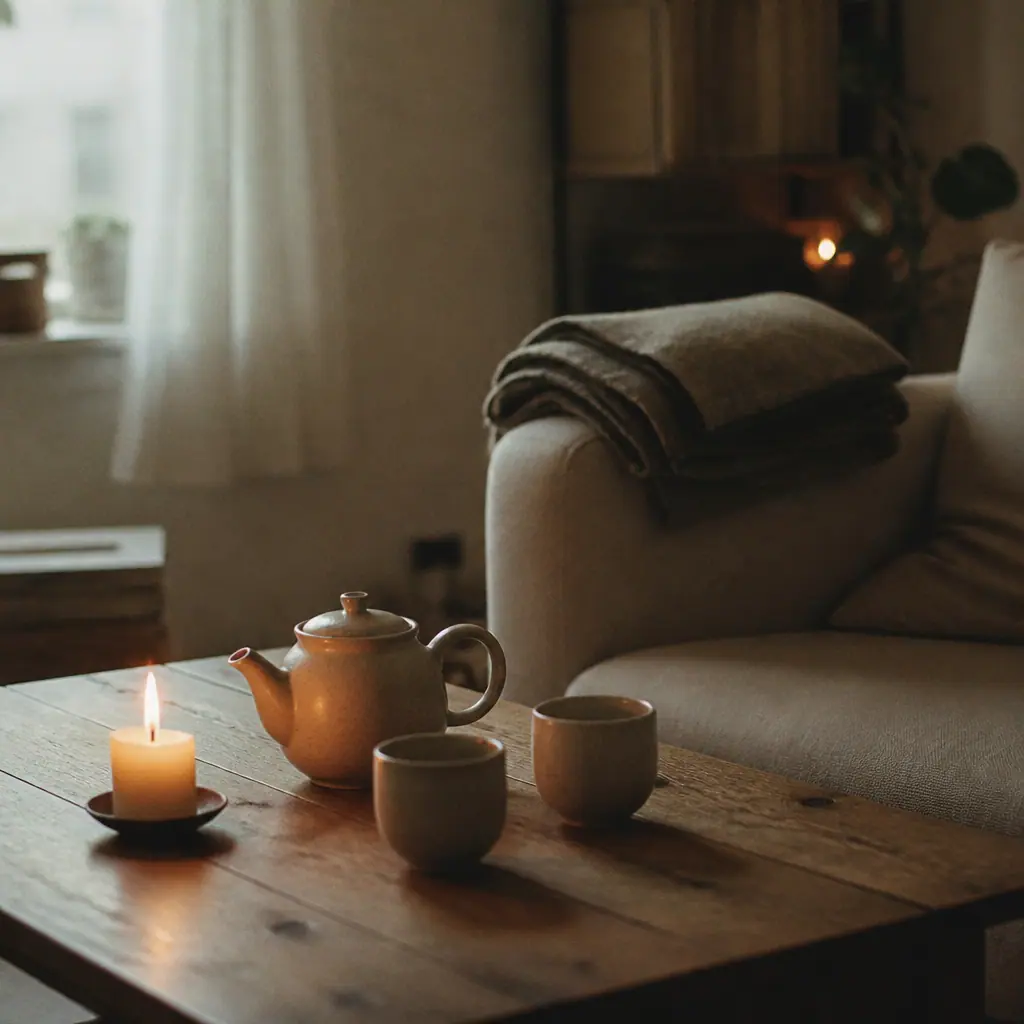
Choose a caffeine-free infusion such as chamomile, lemon balm, peppermint or rooibos. Warm the pot, use water just off the boil for herbal blends, and give it a few minutes. Drinking from a cup that you like holding makes the pause feel intentional. If you prefer ordinary tea, move it to the afternoon and leave the evening for something gentler.
Lower the lights, lower the noise
About an hour before bed, switch from overhead light to lamps, put screens down or dim them, and set out tomorrow's essentials so that the morning needs fewer decisions. A short tidy of one surface, rather than the whole room, is enough to mark the end of the day.
Make a place for it
A chair with a throw, a small table for the cup, a shelf for a book: these are all you need. If the place is also pleasant at other times, you will use it more.
Part 07Repair, care and making things last
The most sustainable object is usually the one you already own. Basic care and a few repair skills extend the life of clothes, textiles and furniture by years, and they make objects feel more yours.
A small repair kit
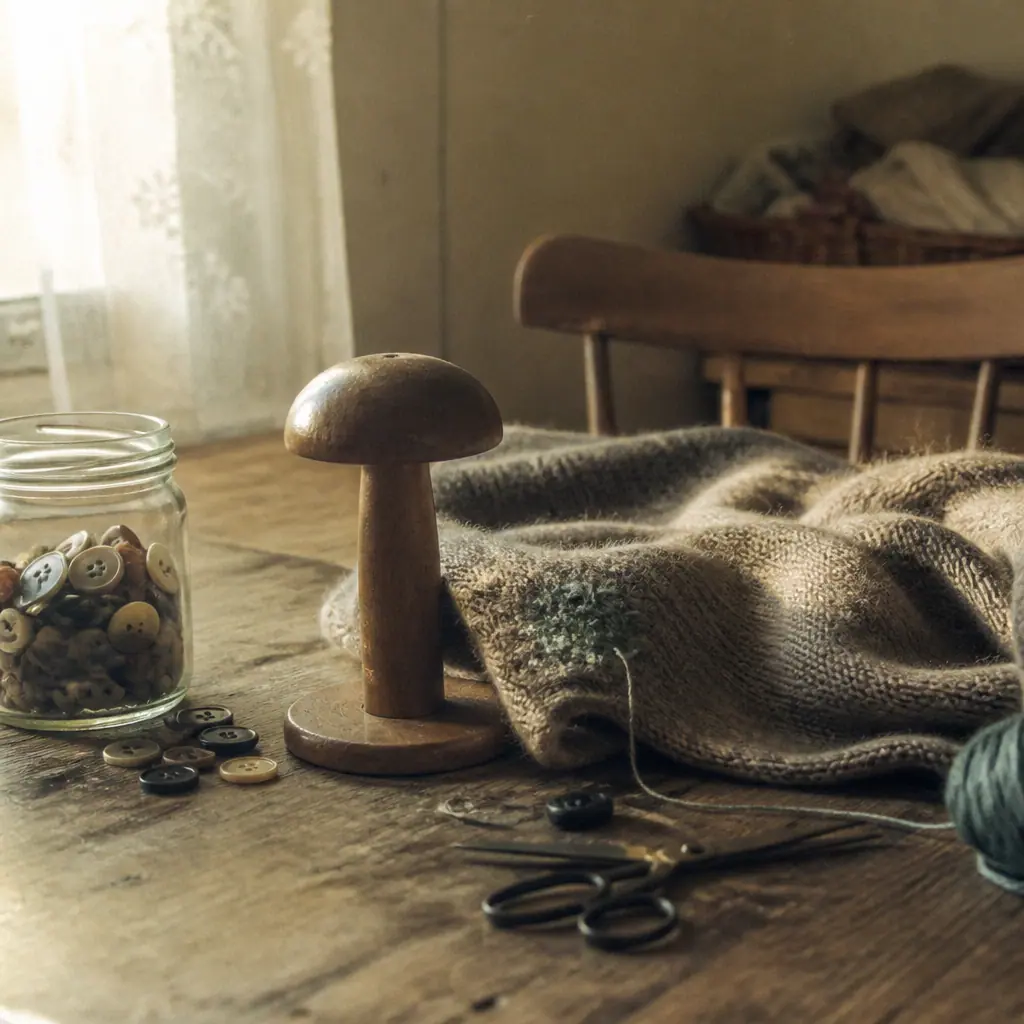
- Needles in several sizes, strong cotton and wool thread, and a darning mushroom or egg.
- Sharp small scissors and a thimble.
- Wood glue, a few screws, fine sandpaper and a block of wax.
- A jar of spare buttons and a bag of fabric offcuts for patches.
Mending textiles
A small hole in a jumper is easiest to fix straight away. Darn with thread close to the original colour, or choose a contrast thread and make the repair a feature. Reinforce the thin area around the hole, not only the hole itself, so the damage does not spread. Patches on cotton and linen work well when stitched with small, even running stitches.
Furniture and objects
Loose joints can be reglued, wobbly legs tightened, and light scratches on wood rubbed out with fine abrasive and wax. Ceramic can be joined with a suitable adhesive for display pieces, though anything used for food or hot drinks should be replaced when it is badly cracked.
Look for local repair cafés, libraries of tools and community workshops, where people share skills and equipment for little or nothing.
Part 08Buying less, and buying better
A calm interior depends less on what you buy than on what you decide not to. Slowing down at the point of purchase is the single habit that changes a home most.
Questions before any purchase
- Where will it live, and what will leave to make room?
- Will I still want it in two years, and can it be repaired?
- Is it made of materials that age well, and are the fittings replaceable?
- Could I borrow, rent or find it second-hand first?
Wait a week
Write down what you want and look at the list again after seven days. Many wants fade. The ones that remain are usually the real needs, and you will buy them with more care.
Look at the cost per year of use
A sturdy chair used daily for twenty years can be cheaper in the long run than a flimsy one replaced every three. Check joinery, stitching, weight and the availability of spare parts. Second-hand shops, house clearances and local makers are often better sources than large retailers for solid, plain objects.
Finally, give things time. A home built slowly, one considered piece at a time, tends to be calmer than one furnished in a weekend.
Part 09Questions
How many colours should a calm room use?
Usually three: a pale base, a natural mid tone and one small accent. Repeating them in different materials gives a settled look without needing more.
Is linen too creased and fussy for everyday use?
Not if you accept the crumple. It is strong, washes well and softens over time, which is why it is a long-lasting choice for sheets, curtains and tea towels.
How often should I oil a wooden board?
When the surface looks dry or pale, which is typically every few weeks with regular use. Wash by hand and let it dry upright between uses.
Are scented candles bad for a home?
Used sparingly and burned properly, they are fine for most households. Trim the wick, keep the room ventilated and never leave a flame unattended.
What is the quickest way to make a room feel calmer?
Clear one surface, switch the overhead light for a lamp and open a window for a few minutes. These cost nothing and show an immediate difference.
Can every damaged item be repaired?
No. Cracked food-contact ceramics and badly damaged safety items should be replaced. Most textiles, furniture joints and small fittings are worth trying to fix first.